



Major League Soccer’s roster rules are, to put it charitably, a convoluted disaster. Help may finally be on the way, with the league reportedly considering a broader overhaul as we prepare to transition to a summer-to-spring calendar in 2027. Until then, we’re all still stuck trying to earn our doctorates in GAM, TAM, DP and U22.
That’s why we’re launching an ongoing explainer series on MLS roster rules, what the acronyms actually mean, and how they're applied in the real world. We’re starting with a question that has become particularly relevant in Sounders-land: Can an MLS team buy down a Designated Player?
It’s hardly an academic discussion in Seattle right now. The Sounders’ three DP spots are famously occupied by Jordan Morris, Pedro de la Vega and Albert Rusnák, a trio that has inspired no shortage of debate amid recurring injuries for Morris and De la Vega, Rusnák’s advancing age and the larger questions surrounding the construction of the roster.
Let's first tackle the biggest question people probably have:
Could the Sounders buy down one of their current DPs?
From what I can tell, it does not appear so.
Why, you ask? To convert a Designated Player into a non-DP using TAM, his budget charge must fall beneath the upper-TAM limit. For 2026, that ceiling is about $1.8 million.
Morris and Rusnák are both above that figure on guaranteed compensation alone. According to the MLS Players Association’s 2026 salary release, Morris is guaranteed approximately $2.37 million and Rusnák approximately $2.69 million.
De la Vega’s listed guaranteed compensation of $1.38 million falls below the TAM ceiling, but salary isn't the only consideration. Acquisition costs also factor in, and Seattle reportedly paid a $7.5 million transfer fee to acquire De la Vega on a four-year contract. I honestly can't definitively tell if he'd be eligible for a buy-down, but looking at that combination of salary number and acquisition cost, it seems highly unlikely.
If that's the case, none of Seattle’s three current DPs appears eligible to be bought down under the 2026 rules. That does not mean the Sounders have never used the mechanism, though. Let's take a look at the examples.
(Note: For those wondering, MLS teams can apparently also use GAM to reduce a DP's salary-budget charge. But best I can tell, TAM is the mechanism for converting an eligible DP into a non-DP and opening his roster slot.)
Osvaldo Alonso and Nelson Valdez
|


We all know and remember Ozzie Alonso fondly as an indisputable member of the Sounders' Mount Rushmore. The Cuban midfielder joined the club ahead of their inaugural 2009 season and developed into a club legend, eventually signing a Designated Player contract.
When MLS introduced TAM during the 2015 season, Alonso's contract fit the new mechanism: It exceeded the league's maximum salary-budget charge but remained below TAM's upper spending limit. Seattle could then apply TAM to his budget charge, convert him from a DP into a non-DP and open a roster slot without removing him from the team or reducing his pay.
The Sounders used that opening to sign Paraguayan forward Nelson Valdez from Eintracht Frankfurt in August 2015. Valdez arrived with extensive European experience and had played in two World Cups. He's actually considered a massive bust of a DP from a total production standpoint, with only one regular-season goal for Seattle. But Valdez also scored three times in the playoffs, none bigger than his late winner against Sporting Kansas City, aka the Club of Professional Wrestling Enthusiasts, to launch Seattle's run to a first-ever MLS Cup title in 2016. Those heroics salvaged his legacy with the club to a great extent.
That is the idea behind buying down a DP: opening a spot for another one without losing the player who previously occupied it.
Xavier Arreaga and João Paulo
|
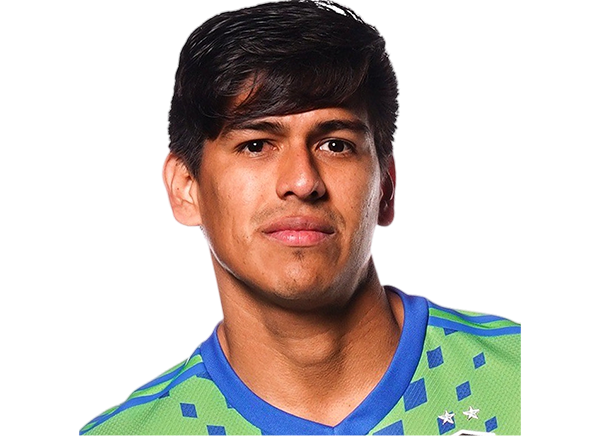


It's funny to look back on now, but Xavi Arreaga was at one time a DP for the Sounders, though only for one season.
Ahead of the 2020 campaign, Seattle used TAM to buy down the polarizing Ecuadorian defender’s salary-budget charge. That allowed the Sounders to sign Brazilian midfielder João Paulo as a DP alongside Nicolás Lodeiro and Raúl Ruidíaz. At its peak, that trio was probably the best DP situation in club history. It was certainly my favorite.
For his part, João Paulo became one of Seattle’s most important midfielders, eventually signing a permanent contract and earning MLS Best XI honors in 2021.
The sequence demonstrates the flexibility you can create with the right maneuvering. Arreaga remained with the Sounders after losing the designation, while João Paulo moved into the slot because the financial structure of his acquisition required it.
João Paulo and Albert Rusnák
|


Two years later, João Paulo became the player Seattle bought down.
The Sounders signed Albert Rusnák as a free agent in January 2022 after the Slovakian playmaker recorded 41g/39a across five seasons with Real Salt Lake. Rusnák required a Designated Player contract, but Seattle’s three slots had been occupied by Lodeiro, Ruidíaz and João Paulo.
Because João Paulo’s contract was eligible to be covered with TAM, Seattle converted him into a non-DP and opened the final slot for Rusnák.
That allowed the Sounders to carry Lodeiro, Ruidíaz, Rusnák and João Paulo on the same roster, even though all four had occupied DP slots during their MLS careers. They formed the core of the team that made history by winning the 2022 Concacaf Champions League.
Buying down a DP creates another path forward
The logic behind a DP buy-down is relatively straightforward. If a player’s contract falls within the league’s TAM parameters, a team can keep paying him the full amount he is owed while changing how that contract is accounted for and opening the DP slot for another addition.
It doesn't work with every contract, but for teams navigating a tricky DP situation, it can provide a valuable middle ground.



Discussion