


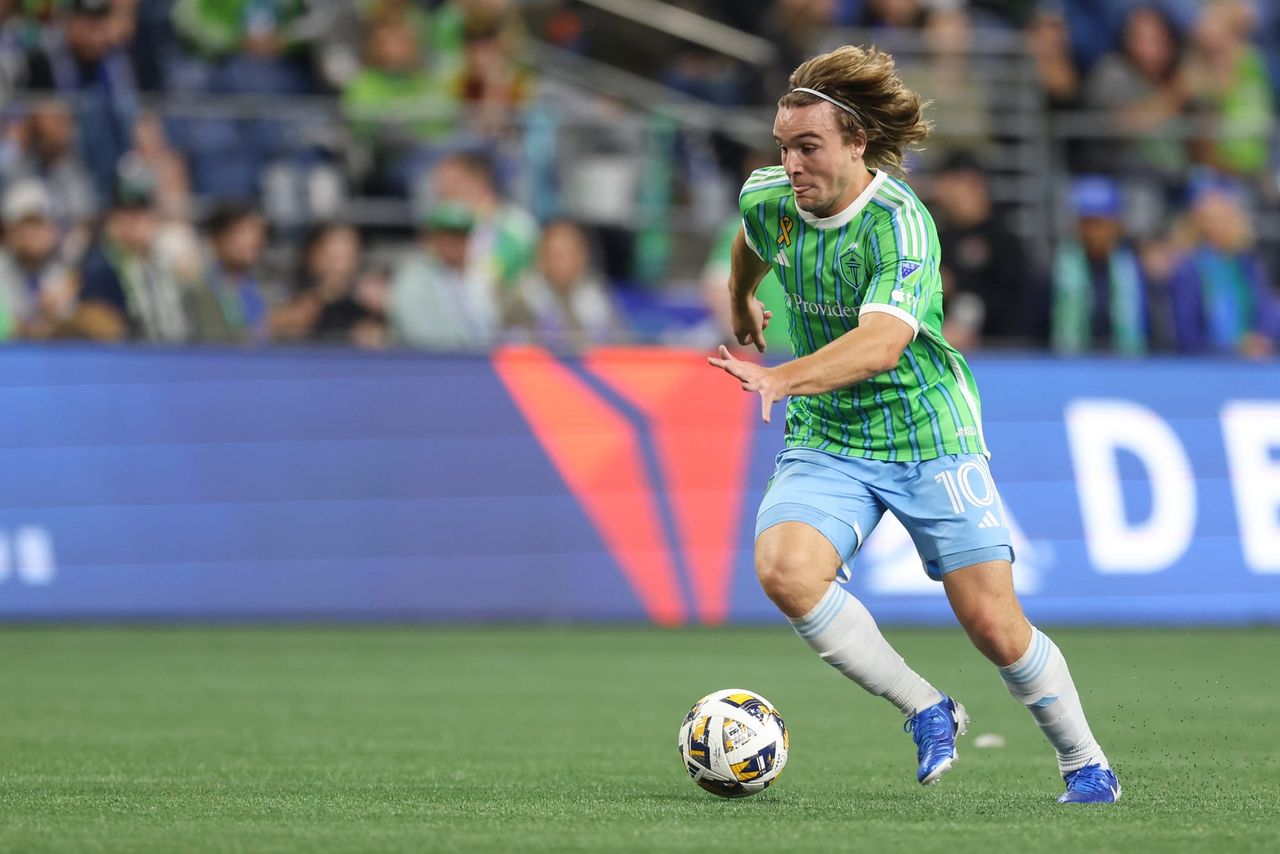

With last week's news that Pedro de la Vega is likely out for the season with a serious quad injury, the conventional wisdom around the Seattle Sounders’ club-record signing feels destined to harden into a simple narrative: PDLV was a disaster. A total bust.
It’s not difficult to understand why. According to Transfermarkt, de la Vega missed 124 days and 20 games with injuries during his first season in Seattle, another 33 days and four games with a hamstring injury in 2025, and 292 days and 25 games with the broken kneecap that kept him out until this summer. Now, he'll be sidelined for an extended period again, just a few minutes into his latest comeback attempt.
For a player signed to be the heir apparent to Nicolás Lodeiro and a centerpiece of the Sounders’ next era, that’s an undeniably disappointing return. But as we start to assess de la Vega’s legacy in Seattle, reducing his tenure to that of an injury-riddled bust feels like an oversimplification.
The bet
It’s worth remembering why the Sounders were so enamored with de la Vega in the first place.
Before arriving in Seattle, PDLV was one of Argentina's more highly regarded young attacking players, breaking through with Lanús as a teenager and establishing himself as a productive player in the Argentine top flight. The talent was obvious, as was the potential for a future move overseas.
But there was an equally obvious reason a player with that pedigree was available to the Sounders.
De la Vega tore his ACL in 2022, wiping out almost his entire season and interrupting the trajectory that had made him such a highly regarded prospect. Seattle was effectively betting that the injury had depressed the value of a player whose underlying talent remained intact, giving them an opportunity to acquire the type of young, dynamic attacker who might otherwise have been beyond their reach.
Given everything that’s happened since, it’s fair to question whether the Sounders properly accounted for that risk. This wasn’t a player with a spotless injury history who suddenly became injury-prone after arriving in Seattle. They knew they were taking a gamble, and they did so with a club-record transfer fee and the DP slot previously occupied by one of the greatest players in club history.
They lost that gamble. But were they wrong to make it? At the very least, that's a more complicated question than the final outcome would indicate.
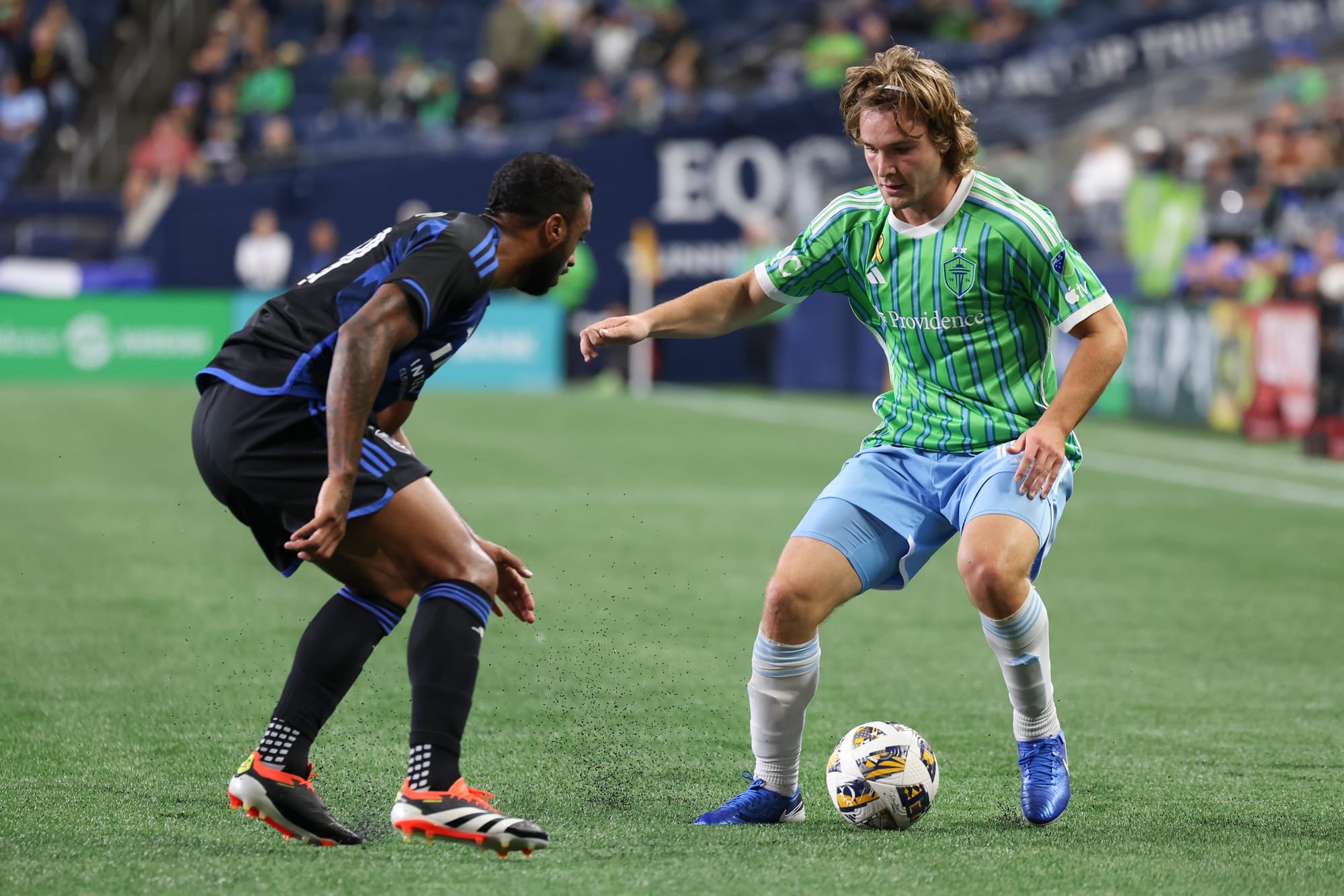
The most frustrating part of the de la Vega story is that the talent evaluation was actually quite clearly correct. When he finally got healthy enough to show it consistently, you could see exactly why the Sounders were willing to take the risk in the first place. The explosiveness, the creativity, the ability to eliminate defenders off the dribble — all of it was there in spades.
And that’s what makes the whole thing feel more tragic than a typical prospect who simply never lived up to his billing. This isn’t a case where we’re left projecting some hypothetical version of the player. We actually got to see him become it.
For stretches, the upside Seattle gambled on was right there in front of us. If de la Vega had been able to stay healthy and sustain that level, there’s a very good chance we’d be talking about his acquisition as an incredible piece of business.
What did Seattle actually get?
The ball traveled nearly the entire width of the field.
Alex Roldan had picked his head up and sent a diagonal toward de la Vega, waiting near the opposite corner of the penalty area. PDLV tracked it out of the sky, cushioned it with his right foot and, before the ball ever touched the ground, spun his body toward goal.
Then he hit it.
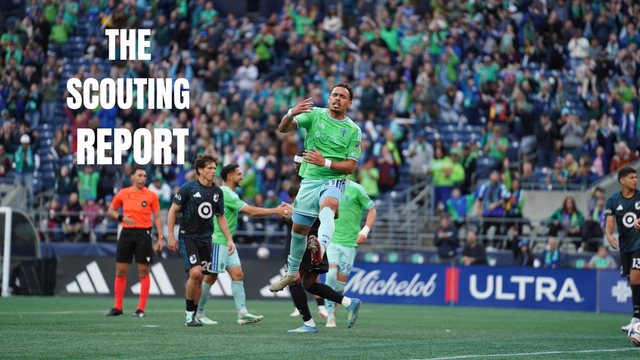
De la Vega caught the volley flush, sending it screaming across goal and into the far upper corner. The shot was almost geometrically perfect, somehow kissing off three posts without ever grazing the net. He took off toward the corner flag with a disbelieving smile on his face as Lumen Field erupted around him. It was such an insane piece of skill that some of his teammates reacted with expressions of astonishment more than elation.
It was PDLV's second goal in roughly 20 minutes after coming off the bench against Cruz Azul, the exclamation point on a surreal 7-0 demolition of the reigning Concacaf champions and, eventually, a finalist for the FIFA Puskás Award.
The final statistical haul from Seattle’s club-record signing isn’t overwhelming. But de la Vega also helped deliver something harder to quantify.
He helped give the Sounders Leagues Cup 2025.
And not just the trophy. He was one of the central characters in everything that made the journey to it so unforgettable.
The day that changed the equation
I’m not going to sit here and pretend the Leagues Cup trophy itself is the primary reason any of this matters.
It was cool. By winning it, the Sounders completed the trophy case, adding the one piece of silverware they hadn’t already won. There’s genuine bragging rights in being able to say you’re the club that has won everything. Beyond that, the CCC spot and prize money you get for winning it are both very real, no matter what you think of the tournament.
But the trophy itself was secondary to everything that came with it.
That entire Leagues Cup run was the type of experience that reminds you why you spend an unreasonable amount of your life caring about a soccer team in the first place. It started with the absurdity of hanging seven goals on Cruz Azul. It included de la Vega producing the best goal I’ve ever seen in person. And it ended with Lionel Messi and the Barca Boys coming to Lumen Field for a Cup final.
The opponent made everything about that day different.
By then, Miami had become the ultimate symbol of the superstar-driven MLS arms race: Messi, Luis Suárez, Sergio Busquets, Jordi Alba and a roster constructed with ambitions that extended well beyond simply being another good MLS team.
Seattle represents the exact opposite. The Sounders had spent years building around academy products, longtime club stalwarts and players developed within their own system. We had already been having plenty of fun with the Built Not Bought narrative by the time Miami arrived.
Then Seattle went out and made it real.
They beat Messi’s Inter Miami 3-0 in a Cup final with Paul Rothrock and Osaze De Rosario dunking on their heads. De la Vega and Obed Vargas famously got into it with Messi and Rodrigo De Paul. Then came the postgame brawl and crashout crybaby antics, the Suárez spitting incident and, finally, the absolutely hilarious spectacle of Miami having to collect their second-place medals before watching the Sounders lift the trophy in front of them.
The Built Not Bought bit had gone from a fun narrative to almost comically on-the-nose. Seattle’s homegrown kids and bargain-bin heroes had dismantled the most expensive collection of superstars the league had ever seen, then sent the crashout crybabies back to South Florida with silver medals. You couldn’t have scripted it any better.
And that’s ultimately why I have such a hard time evaluating de la Vega’s Sounders career strictly through his statistics or availability.
You can call Leagues Cup a secondary trophy. You can call it a cash grab. You can rank it last on the list of competitions Seattle plays in. None of that really matters to me. This isn’t about assigning value to trophies or deciding which memories you’re allowed to care about. It’s about chasing the dragon of moments like that one.
That’s why we watch all these games. It’s why we spend hours talking about them on our godforsaken show, obsess over roster moves, argue about lineups, and suffer through losing streaks that make everyone involved question their sanity. You do all of it in the hope that every once in a while, you get rewarded with a moment when the whole thing becomes completely ridiculous and unforgettable.
August 31, 2025 was one of those moments.
Pedro de la Vega was one of the biggest reasons that happened.
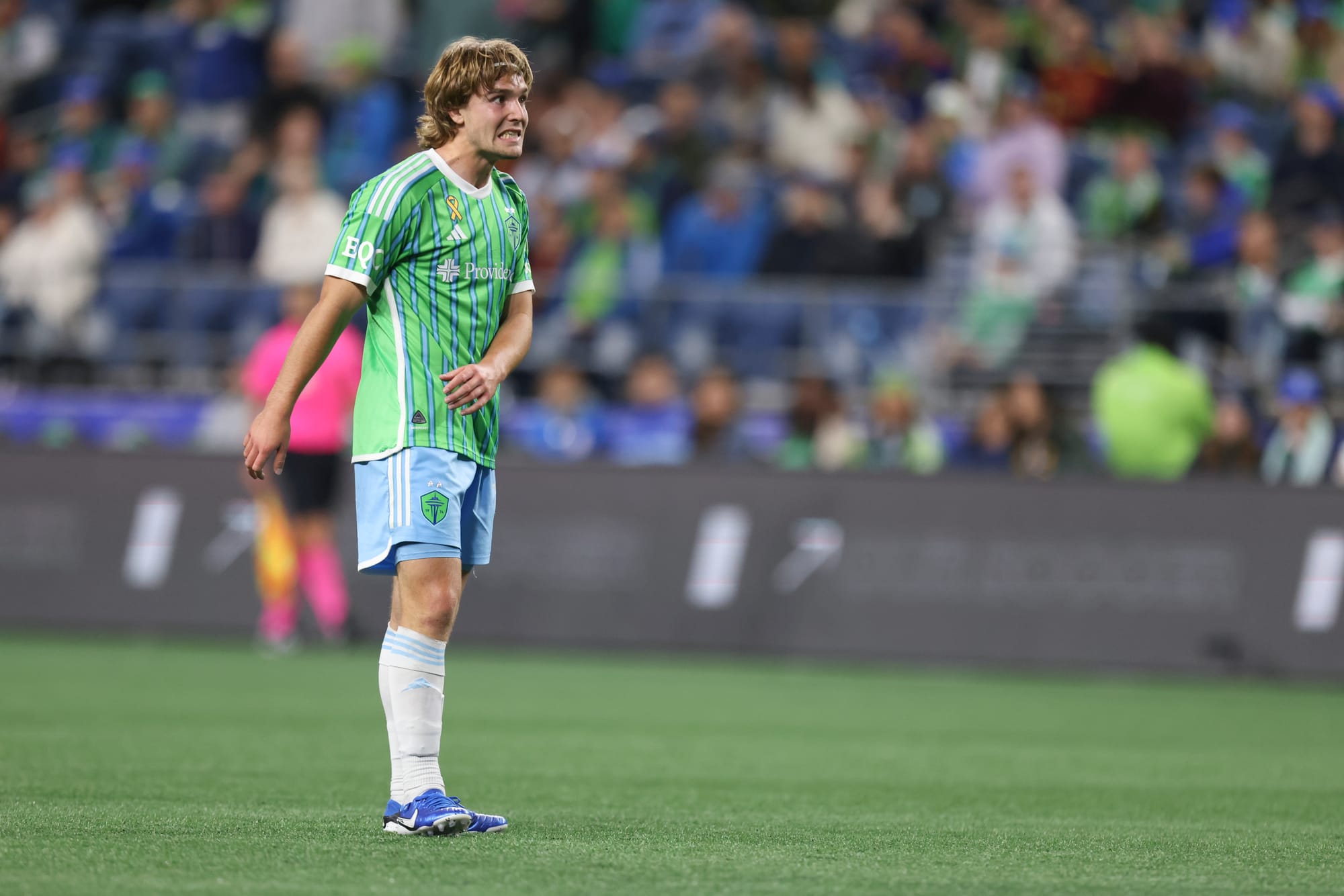
So, was PDLV a bust?
I don’t think you can reasonably call the de la Vega signing a hit.
The Sounders broke their transfer record and handed him a Designated Player spot because they believed he could become the centerpiece of their attack for years. Availability is part of the equation, and no matter how unfortunate the circumstances were, they simply didn’t get enough games out of him to say the investment fully paid off. Not to mention, the lack of availability for both PDLV and Jordan Morris has clearly impacted Seattle's ceiling in attack, and their ability to contend for more trophies outside of the Leagues Cup victory.
But after everything we just laid out, I don’t think total bust gets it right, either.
A total bust is a player who arrives with massive expectations and leaves behind nothing. De la Vega didn’t leave behind nothing. He showed, however fleetingly, why Seattle made the bet in the first place. He helped produce some of the best attacking soccer I’ve ever seen from a Sounders team. He scored the best goal I’ve ever seen in person. And he played a starring role in a trophy run that gave this club one of the greatest moments in its history.
That matters to me.
Which is why, more than anything, I think I’ll remember de la Vega’s time in Seattle for the overwhelming sense of what might have been.
There’s always some projection involved when we talk about players that way. Not with PDLV. We saw it. When he was healthy and fully firing, I genuinely think you could make the case that he was the most talented player to ever wear a Sounders jersey. The acceleration, the technical ability, the creativity, the audacity to try shit that most players wouldn’t even see — there were moments when he looked capable of taking Seattle’s attack somewhere it had never been before.
That’s what makes this outcome so unfortunate.
The Sounders were right about the player. They were wrong about whether his body would let him stay on the field consistently. Maybe that makes the signing a disappointment.
But a total failure? I can’t get there. We all saw what Pedro de la Vega could be. We saw what the Sounders could look like with him. And we got August 31, 2025.
I said this on our show Friday, and I mean it: I wouldn’t trade that for anything.


Discussion